
Showing posts with label fashion. Show all posts
Showing posts with label fashion. Show all posts
Saturday, March 8, 2014

Sunday, March 18, 2012
Dont 'buy any clothes for 1 year?
Malaysians love their mall! They love window shopping & buying clothes. I've talked to young adults whose only criteria for buying clothes is 'They like it". No consideration for price or necessity.Many do not know about fit or workmanship. As long as they look fashionable, it's ok! Even many boutiques carry low quality clothes. The kind that have 'curry-puff' hemlines (sewing so bad that the hem curls to one side). I have complained to shop assistants to no avail....
And with the availability of cheap clothes (&bags & shoes) flooding the market, it's so easy for one to keep buying, & buying!, yours truly included. My closet's practically packed & 2nd one on the way. But i have one excuse. I cant part with my old clothes to make way for new. Shopping has been such an experience that each item i buy or have worn has a memory attached. Hence the overflow! And wth fluctuating waistline & weather, i have to hold back certain clothes until i can get into them comfortably again. Some fabrics r just not made for our sunny, sweaty weather. Then there's clothes for weekend outings / formal functions / arty events / gym / travelling / stormy weather / business meetings / ...list goes on..
So i read with interest the following article..
Since last September, a group of women have been on a fashion fast, refusing to buy any article of clothing for 12 months. What have they learned so far from The Great American Apparel Diet, as the experiment’s called?
And with the availability of cheap clothes (&bags & shoes) flooding the market, it's so easy for one to keep buying, & buying!, yours truly included. My closet's practically packed & 2nd one on the way. But i have one excuse. I cant part with my old clothes to make way for new. Shopping has been such an experience that each item i buy or have worn has a memory attached. Hence the overflow! And wth fluctuating waistline & weather, i have to hold back certain clothes until i can get into them comfortably again. Some fabrics r just not made for our sunny, sweaty weather. Then there's clothes for weekend outings / formal functions / arty events / gym / travelling / stormy weather / business meetings / ...list goes on..
So i read with interest the following article..
Since last September, a group of women have been on a fashion fast, refusing to buy any article of clothing for 12 months. What have they learned so far from The Great American Apparel Diet, as the experiment’s called?
Saturday, August 13, 2011
Stylefinder
Stylish finds :
PAINTBRUSH DRESS

 http://www.stylefeeder.com/i/2wvd1z21/Vince-Paint-Brush-Mini-Dress-Saks-Com
EMBROIDERED DRESS


http://www.stylefeeder.com/i/ly7800q1/Quot-Stephanie-Quot-Embroidered-Shift-Dress
SEQUIN B&W DRESS

http://www.stylefeeder.com/i/4q0zvrkt/Rachel-Zoe-Sequin-Shift-Dress
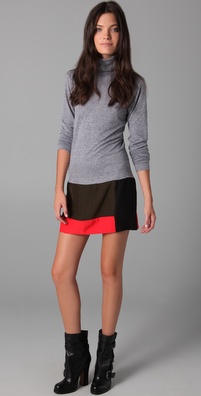
Latest trend : COLOUR BLOCKING

 http://www.stylefeeder.com/i/cym4r05q/Abaete-Halter-Patio-Dress-Dresses-Neiman-Marcus


PAINTBRUSH DRESS


EMBROIDERED DRESS


http://www.stylefeeder.com/i/ly7800q1/Quot-Stephanie-Quot-Embroidered-Shift-Dress
SEQUIN B&W DRESS

http://www.stylefeeder.com/i/4q0zvrkt/Rachel-Zoe-Sequin-Shift-Dress
Latest trend : COLOUR BLOCKING

Tuesday, May 31, 2011
Would u wear vintage fashion?
Fashion is a cycle. When I was a wee kid in primary school, I was wearing "baby doll " dresses (as it was called back then). Now its the 'tent', 'smock' or 'mini' dresses worn with leggings. Luckily, I still can wear them, but not with leggings (still think I'd look like Big Bird)
 Paper patterns to help one make their own dress. One pattern, 3 outfits
I love the cut of a Mary Quant 60's mini dress (minus the tall boots). There are people who are interested in these vintage fashion, either wearing the real stuff from that era ("previously-loved" clothes, to vintage connoisseurs or "secondhand clothes", to the uninitiated!) or an 'inspired' piece (copied lah!)
Many would prefer the first as the workmanship is much, much better. They don't cut corners. Stitches are strong - even the thread used is of better quality. The sewing techniques are neater & accurate. You don't get one sleeve longer than the other, crooked lapels (collar) or buttons dropping off! Many are hand sewn according to proper needlework techniques. I studied sewing, so I notice stuff!
 Our 'bible' in those tailoring days...
 Notice how the stripes line -up perfectly?
The cut or fit is better, provided you have the same proportions (body measurements) as model the dress was made according to. This can be a problem as most of the clothes are fitting and cut to a specific body and the fabric is usually not stretchable. And most people do not have the wisp (24") waist & hourglass figure to carry off the clothes. Think "cheongsam". There were no fast-foods back then!
I think I will have problem with the fabric. Fabric technology has come a long way since Chanel first used jersey (stretchable knit fabric) and bias cut fabric to give her wearer some flexibility and ease of wear. Vintage fabric are usually stiff. Darts at various places (bust, waistline) were used to fit the fabric to the body so that it looks figure-hugging. But everyone realises that when one sits down, certain parts of our body expands (tummy-lah!!) and it can be quite uncomfortable.
I remember reading that filmstars of yesteryear (50's) used to have a few copies of the same dress on set - why? When they are standing, the dress is made to fit exactly. But when the scene requires her to sit, she has to change to another simillar dress but looser!! Hollywood magic!!!!
The 70s, was the time synthetic fabric was introduced - polyester, nylon fibres (brand=Teteron) - were scratchy & hot. Believe me! I am very sensitive to the feel of fabric & had to suffer wearing the many dresses, culottes, jumpsuits mom made for us. And cars, rooms & shops did'nt always have air-conditioning! I spent hours at fabric stores everytime Chinese New Year comes around, not spoilt for choice, but desperately looking for soft, comfortable fabric. I once bought a white textured fabric, so soft & comfy, I sewed into a long-sleeved blouse & wore at many occasions. On retrospective, I think that was a kind of 'diaper' fabric.. really!!
 Notice the fit & stiff fabric which makes the dress (and wearer) stand out regally!
If you are into vintage, the range of designs are quite wide - 50's =regal looking 'Jackie Onassis' style suits; 60's Mary Quant=minis; 70's ="flower children" hippie dresses, bell-bottoms, ponchos, maxis & caftans; 80's=high collared, long sleeved, pleated dresses (Victorian inspired), mutton-sleeves... (personally, I find 80's clothes the most hideous)
An observation: As I take public transport (aka LRT - train), I have been people-watching or rather fashion-watching. There is a senior couple that always take the same coach with me.
Side story : Regular users like us have a favourite spot on the train. Many like to take the middle section (which is usually crowded, because it is nearer to the station's exit turnstiles). Some diehards like me prefer the front of the train - why? It's nearer the driver. If there's any emergency like a power failure, I'd like to know what's being done. If I'm at the back of the train, I'd go crazy not knowing what's happening. That did happen once in a regular night mail train. I bought the ticket late , so was assigned the last coach. The train stopped at a station for an extra-long time but we were in the dark as to what was happening. Only much later did the train conductor tells us to alight the train in near darkness and board the last of the 24 buses waiting for us. Almost did'nt make it if not for a kind gentleman who helped me load all my luggage!
Back to the observation - This senior lady I've noticed has been wearing only 3 dresses of similar design, cut & fit, throughout the many months I've seen the couple. No joke!! The dress is an 80's original - from the look of the fabric & style - fitted at the bodice with a finely pleated skirt attached at the waist. The waistline joint is covered with a piece of bias fabric which is so worn out, it's literally falling to pieces! The fabric looks fragile too, having been washed so many times but because its polyester from the 80's, the colour is still fast & fabric still wearable.
Frugal? Eccentric? Obsessive? Stuck in yesteryear? Lover of vintage?.. I only can say that they are a loving couple. I've never seen the lady by herself. The husband is always smartly dressed in long sleeved shirt & dress pants, by her side. Once a while a third lady (a friend or relative) accompanies them. They look strong & happy. What else does one need? To each his own...
Check out these vintage lovers blogs:
Vintage Socialites - a blog selling vintage clotes at very reasonable price (approx RM50). Visit the blog & enjoy a great retro song selection.
http://dressforyesteryear.blogspot.com
Soul Doctor's Flea Market directory
http://souldoctor.blogspot.com/2005/07/soul-doctors-flea-markets-directory.html
Soul Doctor Fashion blog - vintage finds do work for her
http://souldocfashion.blogspot.com/
Note : This is a re-post from Crazeepatches.blogspot.com (my other blog)
 Paper patterns to help one make their own dress. One pattern, 3 outfits
 I love the cut of a Mary Quant 60's mini dress (minus the tall boots). There are people who are interested in these vintage fashion, either wearing the real stuff from that era ("previously-loved" clothes, to vintage connoisseurs or "secondhand clothes", to the uninitiated!) or an 'inspired' piece (copied lah!)
Many would prefer the first as the workmanship is much, much better. They don't cut corners. Stitches are strong - even the thread used is of better quality. The sewing techniques are neater & accurate. You don't get one sleeve longer than the other, crooked lapels (collar) or buttons dropping off! Many are hand sewn according to proper needlework techniques. I studied sewing, so I notice stuff!
 Our 'bible' in those tailoring days...
 Notice how the stripes line -up perfectly?
The cut or fit is better, provided you have the same proportions (body measurements) as model the dress was made according to. This can be a problem as most of the clothes are fitting and cut to a specific body and the fabric is usually not stretchable. And most people do not have the wisp (24") waist & hourglass figure to carry off the clothes. Think "cheongsam". There were no fast-foods back then!
I think I will have problem with the fabric. Fabric technology has come a long way since Chanel first used jersey (stretchable knit fabric) and bias cut fabric to give her wearer some flexibility and ease of wear. Vintage fabric are usually stiff. Darts at various places (bust, waistline) were used to fit the fabric to the body so that it looks figure-hugging. But everyone realises that when one sits down, certain parts of our body expands (tummy-lah!!) and it can be quite uncomfortable.
I remember reading that filmstars of yesteryear (50's) used to have a few copies of the same dress on set - why? When they are standing, the dress is made to fit exactly. But when the scene requires her to sit, she has to change to another simillar dress but looser!! Hollywood magic!!!!
The 70s, was the time synthetic fabric was introduced - polyester, nylon fibres (brand=Teteron) - were scratchy & hot. Believe me! I am very sensitive to the feel of fabric & had to suffer wearing the many dresses, culottes, jumpsuits mom made for us. And cars, rooms & shops did'nt always have air-conditioning! I spent hours at fabric stores everytime Chinese New Year comes around, not spoilt for choice, but desperately looking for soft, comfortable fabric. I once bought a white textured fabric, so soft & comfy, I sewed into a long-sleeved blouse & wore at many occasions. On retrospective, I think that was a kind of 'diaper' fabric.. really!!
 Notice the fit & stiff fabric which makes the dress (and wearer) stand out regally!
If you are into vintage, the range of designs are quite wide - 50's =regal looking 'Jackie Onassis' style suits; 60's Mary Quant=minis; 70's ="flower children" hippie dresses, bell-bottoms, ponchos, maxis & caftans; 80's=high collared, long sleeved, pleated dresses (Victorian inspired), mutton-sleeves... (personally, I find 80's clothes the most hideous)
An observation: As I take public transport (aka LRT - train), I have been people-watching or rather fashion-watching. There is a senior couple that always take the same coach with me.
Side story : Regular users like us have a favourite spot on the train. Many like to take the middle section (which is usually crowded, because it is nearer to the station's exit turnstiles). Some diehards like me prefer the front of the train - why? It's nearer the driver. If there's any emergency like a power failure, I'd like to know what's being done. If I'm at the back of the train, I'd go crazy not knowing what's happening. That did happen once in a regular night mail train. I bought the ticket late , so was assigned the last coach. The train stopped at a station for an extra-long time but we were in the dark as to what was happening. Only much later did the train conductor tells us to alight the train in near darkness and board the last of the 24 buses waiting for us. Almost did'nt make it if not for a kind gentleman who helped me load all my luggage!
Back to the observation - This senior lady I've noticed has been wearing only 3 dresses of similar design, cut & fit, throughout the many months I've seen the couple. No joke!! The dress is an 80's original - from the look of the fabric & style - fitted at the bodice with a finely pleated skirt attached at the waist. The waistline joint is covered with a piece of bias fabric which is so worn out, it's literally falling to pieces! The fabric looks fragile too, having been washed so many times but because its polyester from the 80's, the colour is still fast & fabric still wearable.
Frugal? Eccentric? Obsessive? Stuck in yesteryear? Lover of vintage?.. I only can say that they are a loving couple. I've never seen the lady by herself. The husband is always smartly dressed in long sleeved shirt & dress pants, by her side. Once a while a third lady (a friend or relative) accompanies them. They look strong & happy. What else does one need? To each his own...
Check out these vintage lovers blogs:
Vintage Socialites - a blog selling vintage clotes at very reasonable price (approx RM50). Visit the blog & enjoy a great retro song selection.
http://dressforyesteryear.blogspot.com
Soul Doctor's Flea Market directory
http://souldoctor.blogspot.com/2005/07/soul-doctors-flea-markets-directory.html
Soul Doctor Fashion blog - vintage finds do work for her
http://souldocfashion.blogspot.com/
Saturday, April 2, 2011
Slow fashion - using Reverse Applique
Somewhere out there, there are people still using hand stitching to join and sew togther a dress! Wow!
Lots of technical question marks in my head. eg. is the hand stitching gonna be strong enuff to hold it together? How much time is it gonna take? Quality of the stitching? Are there people willing to sewer it? And the final two marketing question - how much more will it cost? & will anyone buy it?
Here's the link to the story : http://blog.fidmmuseum.org/museum/2011/03/project-alabama-reverse-applique-dress.html
Here's some excerpts that may answer my questions :
PROJECT ALABAMA
From 2001-2006, Project Alabama earned rack space in boutiques from Tokyo to New York City and appeared in Vogue, Harper's Bazaar and many other publications. All this despite Project Alabama's location in Florence, Alabama, far from the fashion centers of New York or Paris.
The company got its start in 2001, when native Alabaman and former stylist Natalie Chanin needed something to wear to a party in New York City. Chanin deconstructed a t-shirt, cutting it apart and sewing it back together with visible stitches. The one-off shirt was a tremendous success, earning compliments and inquiries about where it was purchased. Based on the success of her spontaneous design, Chanin decided to make similar t-shirts for retail sale. At first, Chanin wanted to produce her t-shirts in New York, but quickly realized that she'd have more success producing garments with a handmade appearance if she hired sewers skilled in hand-sewing techniques. This led Chanin back to Alabama, where handwork, particularly quilting, was still an important part of local culture.
HAND-SEWN DRESS
Each Project Alabama t-shirt or dress was handmade, start to finish. Local sewers, called stitchers in company parlance, worked from home to produce garments with a distinctly handmade appearance. The basis of each garment was cotton jersey, which was then hand-stitched into t-shirts, dresses, skirts or other garments. The unmistakable appearance of Project Alabama's garments resulted from multiple types of embellishment, including applique, embroidery, stencil. beading and visible stitches.
Project Alabama garments rely entirely on hand-stitching, no machines allowed!
PRICE ?
Because they were entirely handmade, Project Alabama garments were expensive. T-shirts were priced from $150-$300, while a dress could run as high as $3,000. These prices, however, allowed stitchers to earn a living wage in an area with little industry. At its peak, Project Alabama employed 200 stitchers.
SLOW FASHION MOVEMENT
Project Alabama was also an early purveyor of what is now called Slow Fashion, a movement that rejects the quick turnover of contemporary fashion and advocates quality over quantity. Slow Fashion is also concerned with reducing the ecological impact of fashion by re-making, mending, shopping second-hand and examining the supply chain for the production of new garments.
Lots of technical question marks in my head. eg. is the hand stitching gonna be strong enuff to hold it together? How much time is it gonna take? Quality of the stitching? Are there people willing to sewer it? And the final two marketing question - how much more will it cost? & will anyone buy it?
Here's the link to the story : http://blog.fidmmuseum.org/museum/2011/03/project-alabama-reverse-applique-dress.html
Here's some excerpts that may answer my questions :
PROJECT ALABAMA
From 2001-2006, Project Alabama earned rack space in boutiques from Tokyo to New York City and appeared in Vogue, Harper's Bazaar and many other publications. All this despite Project Alabama's location in Florence, Alabama, far from the fashion centers of New York or Paris.
The company got its start in 2001, when native Alabaman and former stylist Natalie Chanin needed something to wear to a party in New York City. Chanin deconstructed a t-shirt, cutting it apart and sewing it back together with visible stitches. The one-off shirt was a tremendous success, earning compliments and inquiries about where it was purchased. Based on the success of her spontaneous design, Chanin decided to make similar t-shirts for retail sale. At first, Chanin wanted to produce her t-shirts in New York, but quickly realized that she'd have more success producing garments with a handmade appearance if she hired sewers skilled in hand-sewing techniques. This led Chanin back to Alabama, where handwork, particularly quilting, was still an important part of local culture.
 |
| Tank dress with reverse applique |
HAND-SEWN DRESS
Each Project Alabama t-shirt or dress was handmade, start to finish. Local sewers, called stitchers in company parlance, worked from home to produce garments with a distinctly handmade appearance. The basis of each garment was cotton jersey, which was then hand-stitched into t-shirts, dresses, skirts or other garments. The unmistakable appearance of Project Alabama's garments resulted from multiple types of embellishment, including applique, embroidery, stencil. beading and visible stitches.
Project Alabama garments rely entirely on hand-stitching, no machines allowed!
 |
| Bodice of the reverse applique dress |
PRICE ?
Because they were entirely handmade, Project Alabama garments were expensive. T-shirts were priced from $150-$300, while a dress could run as high as $3,000. These prices, however, allowed stitchers to earn a living wage in an area with little industry. At its peak, Project Alabama employed 200 stitchers.
SLOW FASHION MOVEMENT
Project Alabama was also an early purveyor of what is now called Slow Fashion, a movement that rejects the quick turnover of contemporary fashion and advocates quality over quantity. Slow Fashion is also concerned with reducing the ecological impact of fashion by re-making, mending, shopping second-hand and examining the supply chain for the production of new garments.
Thursday, March 5, 2009
Sonia Rykiel 'Butterfly' intarsia strappy dress


Subscribe to:
Posts (Atom)